Italian Architecture: Proportion, Symmetry, and Human-Centered Design in Modern Architecture
- Gourav

- Feb 25
- 3 min read
Let’s challenge a modern misconception.
Today’s architecture often celebrates complexity, irregularity, and visual disruption. But here’s the problem:Not all complexity enhances experience.
Italian architecture—especially from the Renaissance—operates on a different principle:Clarity creates comfort. Proportion creates meaning. Symmetry creates order.
This is not about classical aesthetics.It is about how humans perceive, navigate, and emotionally respond to space.
The real value lies in understanding how these principles improve spatial behavior in modern design.
1. Proportion: The Mathematics of Comfort
Italian architecture is grounded in proportional systems. This is not decorative—it is cognitive.


First-Principles Breakdown:
Humans subconsciously respond to harmonic ratios
Balanced proportions reduce cognitive strain
Scale relationships define spatial readability
Strategic Translation:
Use consistent proportional relationships across elements
Align openings, heights, and volumes with human scale
Avoid arbitrary dimensions that disrupt visual harmony
Design Insight:
Proportion is not about beauty alone.It is about making space intuitively understandable.
2. Symmetry: Creating Orientation and Stability
Symmetry is often dismissed today as rigid or outdated. That’s a shallow critique.


First-Principles Breakdown:
Humans naturally seek balance and order
Symmetry provides immediate spatial clarity
It reduces decision fatigue in navigation
Strategic Translation:
Use symmetry to define primary axes and focal points
Balance elements around key spaces for orientation
Combine symmetry with variation to avoid monotony
Design Insight:
Symmetry is not limitation.It is a framework for clarity and control.
3. Human Scale: Designing for the Body, Not the Image


Italian architecture consistently aligns with human proportions.
First-Principles Breakdown:
Humans perceive space relative to their own body
Overscaled spaces can feel alienating
Underscaled spaces can feel restrictive
Strategic Translation:
Design dimensions based on human movement and posture
Use elements like columns, steps, and openings to reinforce scale
Ensure spaces feel comfortable, not overwhelming
Design Insight:
Human-centered design is not a trend.It is the foundation of meaningful architecture.
4. Spatial Hierarchy: Organizing Importance Through Design
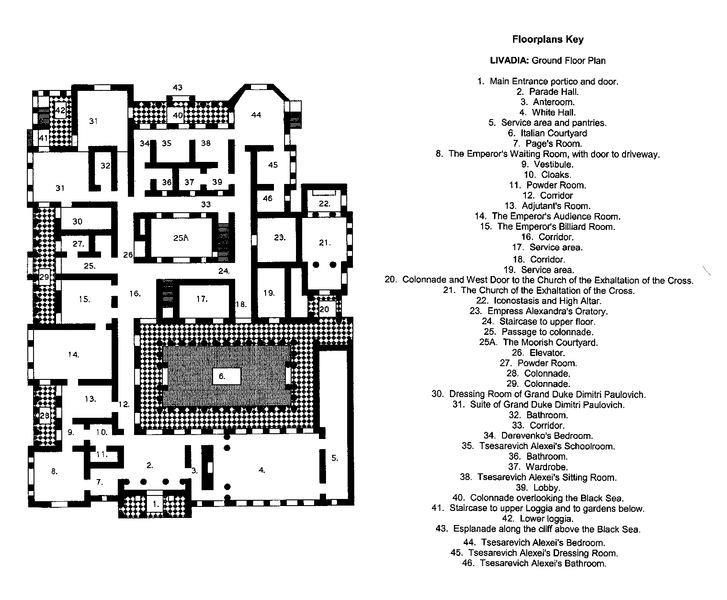
Italian architecture clearly distinguishes between primary and secondary spaces.
First-Principles Breakdown:
Not all spaces serve equal importance
Hierarchy improves navigation and usability
Variation creates interest and clarity
Strategic Translation:
Define dominant spaces and support spaces
Use scale, light, and proportion to signal importance
Avoid flat layouts where everything feels the same
Design Insight:
Hierarchy transforms space from random arrangement into structured experience.
5. Urban Strategy: The Piazza as Social Architecture
Italian cities are defined by piazzas—open public spaces that anchor urban life.


First-Principles Breakdown:
Humans need shared spaces for interaction
Enclosure creates comfort in open areas
Proportion defines usability of public space
Strategic Translation:
Design urban spaces with clear boundaries and human scale
Balance openness with enclosure
Encourage interaction through spatial configuration
Design Insight:
Great cities are not built on buildings alone.They are built on well-designed spaces between them.
6. The Critical Failure in Contemporary Design
Here’s the reality.
Many modern designs:
Ignore proportion and scale
Prioritize visual impact over usability
Create spaces that are either overwhelming or confusing
This results in:
Poor user experience
Weak spatial identity
Lack of emotional connection
The Core Problem:
Modern architecture often abandons human-centered logic in pursuit of novelty.
Italian architecture proves that clarity and proportion create timeless value.
7. Strategic Application for Modern Practice
The goal is not to replicate classical facades.It is to apply the underlying principles.
Actionable Strategies:
Use proportional systems to guide design decisions
Integrate symmetry for clarity, but introduce variation for richness
Design every space with human scale as the primary reference
Create hierarchy to improve navigation and experience
Competitive Advantage:
Architects who master proportion and human-centered design can:
Create intuitive spaces
Enhance user satisfaction
Deliver architecture that remains relevant over time

Conclusion
Italian architecture is not about style. It is about precision in how space is perceived and experienced.
Proportion creates harmony.Symmetry provides clarity.Human scale ensures comfort.Hierarchy organizes experience.Urban spaces foster connection.
These are not historical ideas.They are fundamental design tools.
If modern architecture wants to improve, it must return to designing for people, not just for images.
Call to Action
Architecture reaches its full potential when it aligns with human perception and behavior.
If you want to translate principles like proportion, symmetry, and human-centered design into high-performance modern architecture—Graphite is building that bridge.
Connect with Graphite to elevate your work from visually driven design to spatially intelligent, human-centered architecture that truly performs.


Comments