

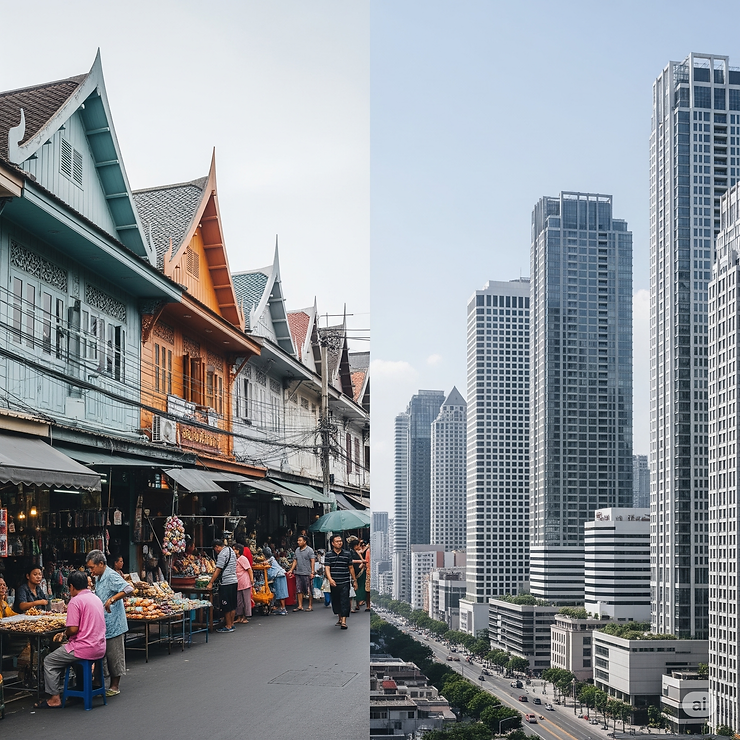
July 1, 2025. The humid air of Bang Khayaeng felt particularly heavy as I stared up at the newest addition to the Pathum Thani skyline. It was a gleaming mixed-use tower, all glass and steel, with a sleek, angular silhouette that felt utterly familiar. Too familiar. It could have been in Singapore, Dubai, Shanghai, or even a rapidly developing district in a European capital. It was “anywhere architecture,” designed, no doubt, by one of the globally recognized firms with offices spanning every continent.
When I first entered the profession, the idea of working on international projects, of seeing designs from “starchitects” rise in distant lands, filled me with awe. Globalization, we were told, would enrich architecture, fostering a cross-pollination of ideas, materials, and technologies. It promised a universal language of modern design, connecting cities across borders. And for a while, it seemed true. We saw innovative structures, sustainable solutions, and stunning aesthetics emerge from collaborative global efforts.
But as I looked at that tower, reflecting the Thai sky in its unyielding glass façade, a deep sense of unease settled in. My initial awe had slowly, subtly, been replaced by a growing concern. The promise of global enrichment seemed to be turning into a pervasive uniformity. The question that haunts me now, echoing through the design studios and urban planning meetings, is:
Is Architecture Losing Its Soul in the Age of Globalization? Are we sacrificing unique cultural identities in the pursuit of globally recognizable styles?
The forces driving this homogenization are powerful and multifaceted:
- The Rise of the Global Firm: A handful of large, influential architectural firms, often headquartered in Western capitals, dominate the global market. Their distinctive, often signature styles are replicated across continents, regardless of local context. They offer a perceived “brand” of excellence and efficiency that appeals to international developers and corporations.
- Standardized Materials and Technologies: The global supply chain has made it easier and often cheaper to source glass, steel, and pre-fabricated components from anywhere in the world. This universal availability leads to a reduction in the use of local, traditional materials and construction techniques that once defined regional character.
- The “Iconic” Trap: Cities, vying for global attention and tourism, often commission “iconic” buildings designed by celebrity architects. These structures, while often visually striking, are frequently detached from their local surroundings, becoming isolated spectacles rather than integrated parts of the urban fabric. Their success is measured by global media attention, not necessarily by how well they serve their immediate community or reflect its identity.
- Globalized Education and Media: Architectural education increasingly emphasizes universal principles and global precedents. Design publications and online platforms showcase international projects, setting global trends that are then emulated worldwide, sometimes at the expense of local sensibilities.
- Client Demand for Predictability: Multinational corporations or developers often seek a consistent brand image or a “proven” international aesthetic for their global ventures, leading to demand for generic, replicable designs rather than culturally specific ones.
The cumulative effect is a distressing phenomenon: the homogenization of our urban landscapes. Walk through the Central Business Districts of many major cities today, and you might struggle to identify which continent you’re on. The glass towers, the sleek plazas, the generic retail storefronts – they all blend into a global sameness. The vibrant, chaotic, often imperfect cultural distinctiveness that once defined cities is being slowly eroded, replaced by a polished, universal veneer.
What is the “Soul” of Architecture, and Why Are We Losing It?
The soul of architecture isn’t found in a flashy façade or an optimized floor plan alone. It resides in:
- Connection to Place: Buildings that feel like they belong, that respond to the climate, topography, and natural light of their specific site.
- Cultural Identity: Structures that reflect local history, traditions, beliefs, and social practices. This isn’t just about superficial ornamentation; it’s about spatial arrangements, material choices, and forms that resonate with the collective memory and way of life of a community.
- Local Craftsmanship and Materials: Buildings that celebrate local skills and indigenous materials, fostering regional economies and reducing environmental footprints.
- Human Scale and Experience: Spaces that engage the senses, invite interaction, and provide comfort and delight to the people who inhabit them daily, not just those who admire them from afar.
- Storytelling: Architecture that tells the story of its place, its people, and its unique evolution.
When a city’s new buildings could be anywhere, they effectively become nowhere. They lack character, narrative, and the profound sense of belonging that truly great architecture provides.
Resisting the Tide: Cultivating Authenticity in a Globalized World
This critical reflection is not a call for architectural isolationism or a nostalgic return to archaic building styles. Globalization, when harnessed thoughtfully, can bring invaluable knowledge, sustainable technologies, and diverse perspectives. The challenge lies in ensuring that global influence enriches local identity, rather than erasing it.
How can architects combat this homogenization and safeguard the soul of our built environment?
- Deep Contextual Research and Immersion: We must go beyond superficial site analysis. This means immersing ourselves in local culture, understanding historical building traditions, studying local climate patterns in detail, and engaging with the community to grasp their aspirations and daily rhythms. For projects in Bang Khayaeng, this means understanding the interplay of the canal, the traditional rima-naam (riverside) living, and the contemporary suburban sprawl.
- Prioritizing Local Materials and Craftsmanship: Wherever possible, specify locally sourced materials and engage local artisans. This not only imbues the building with authenticity but also supports local economies and reduces embodied carbon. This might mean adapting traditional Thai timber techniques or brickwork for modern applications.
- Climate-Responsive Bioclimatic Design: Design that responds intuitively to the local climate – managing sun, wind, and rain without resorting to energy-intensive mechanical systems. This often leads to unique architectural forms that are intrinsically linked to their place.
- Collaborative Practice: Engage in genuine collaboration with local architects, cultural experts, and community stakeholders. Their intimate knowledge of the local context is invaluable and irreplaceable by any global firm’s standardized processes.
- Storytelling and Narrative Architecture: Consciously integrate elements into the design that tell the story of the place and its people. This could be through the use of specific patterns, spatial configurations, or even the incorporation of art that reflects local myths or histories.
- Advocacy for Local Identity: As architects, we have a professional and ethical responsibility to advise clients and developers on the importance of contextual design, even when global trends might suggest otherwise. We must be advocates for the unique character of our cities.
As I left that glass tower in Pathum Thani and drove back through the familiar streets of Bang Khayaeng, past the vibrant local markets and the small, idiosyncratic shophouses, I felt a renewed sense of purpose. The struggle against architectural homogenization is not just an aesthetic battle; it’s a fight for cultural preservation, for the authenticity of our urban experience, and for the very soul of our cities. It demands a conscious effort from every architect to ensure that in our increasingly interconnected world, our buildings remain deeply rooted in their place, celebrating the unique identity that makes each corner of our planet truly special.